
Sewage Smell or Wet, Spongy Spots Over the Drain Field? What's Happening
Quick Answer: A sewage smell paired with soft, spongy, or standing water over your drain field almost always means wastewater is surfacing instead of soaking into the soil below it. The most common causes are a full septic tank pushing solids into the field, a biomat layer clogging the soil pores, or a field that's simply oversaturated after heavy rain. In Central Texas, thin topsoil over caliche, rock, or dense clay makes drain fields especially prone to this kind of surfacing because the soil underneath can't absorb water as fast as sandy or loamy ground can. The EPA lists this exact combination, damp spots plus odor plus unusually lush grass, as a textbook sign of septic system failure, so it's worth a professional look rather than a wait-and-see approach.
You're mowing the yard on a Saturday and the mower bogs down in one stretch of grass that never quite dries out, even though it hasn't rained in a week. Lean down and you catch it, that unmistakable rotten-egg, sewage smell rising off the ground. The grass in that strip is thicker and greener than the rest of the lawn. Your first thought might be a broken sprinkler line. It's usually not. It's your septic system telling you the drain field underneath that spot has stopped doing its job.
This is one of the more common calls we get, and it's also one of the more time-sensitive ones. A drain field surfacing wastewater isn't a cosmetic issue. It's the last stage of your septic system's treatment process failing to work, which means untreated wastewater is sitting at or near the surface of your yard instead of filtering down through soil and rock the way it's designed to.
Why Sewage Smell and Wet Spots Show Up Together
Your drain field's entire job is to take the liquid effluent leaving the septic tank and disperse it slowly through a network of perforated pipe into the soil beneath your yard. As that effluent moves downward, the soil itself acts as a natural filter, and beneficial bacteria in the ground finish breaking down what's left of the waste before it reaches groundwater. When that process works correctly, you'd never know the field was there. No smell, no soggy patches, no unusual grass growth.
What the Smell Tells You
Odor happens when wastewater is sitting close enough to the surface that gases, primarily hydrogen sulfide and methane, escape into the air instead of staying trapped underground. That's a different problem from a smell coming from inside your house, which is more often a dry drain trap or a tank that needs pumping. Odor specifically over the drain field points to the field itself.
What the Wet Ground Tells You
Soil that stays soft, spongy, or visibly damp days after the last rain means water isn't draining downward the way it should. It's backing up and pooling closer to the surface, sometimes even breaking through the grass as standing liquid. The Environmental Protection Agency identifies "soft, wet, or spongy soil, especially when there have been no significant rainfall events" as one of the clearest field-level indicators that a septic system is malfunctioning.
Why the Two Show Up Together
Both symptoms come from the same root cause: wastewater that can no longer soak into the soil at the rate your household is producing it. Once that balance tips, the excess has nowhere to go but up and out, bringing odor with it.
The Three Most Common Causes
A Full or Overdue Septic Tank
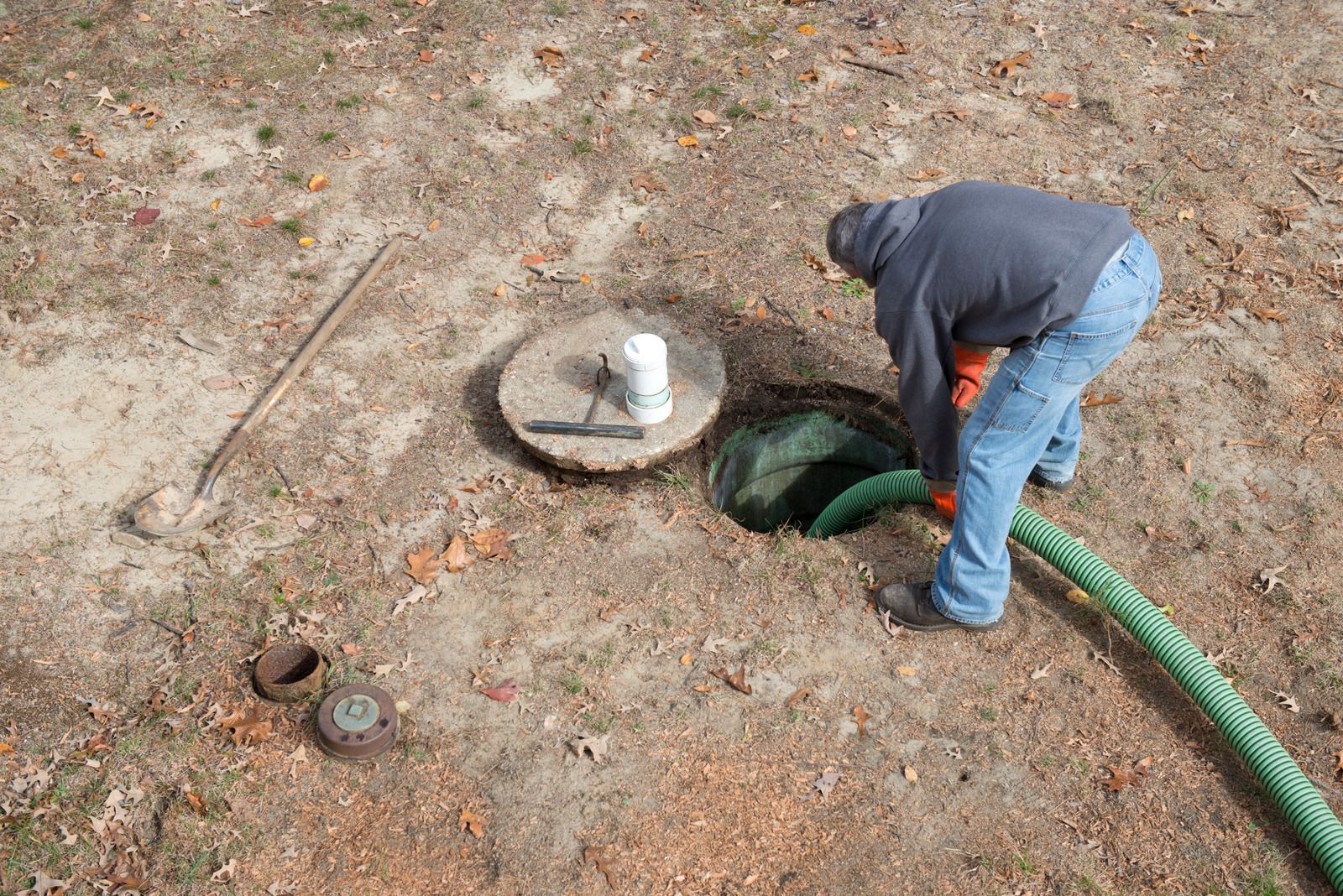
Every septic tank has a job to do before wastewater ever reaches the field: settle out solids, let grease and scum float and separate, and only pass clarified liquid on to the drain field. When a tank hasn't been pumped in years, that settling capacity fills up, and solids start washing into the field lines instead of staying in the tank where they belong. Once solids reach the field, they don't come back out on their own. Most residential septic tanks need pumping every three to five years, though household size and water use shift that window in either direction.
Biomat Buildup in the Soil
Over years of normal operation, a layer of biological slime called biomat naturally forms where the field pipe meets the soil. A thin biomat layer is actually part of how the system treats wastewater, but when it grows too thick, it acts like a plastic sheet laid under your lawn, blocking effluent from passing through instead of helping filter it. Once biomat chokes off enough of the field's absorption area, effluent has nowhere to go but sideways and up.
Oversaturated or Overwhelmed Soil
Sometimes the field itself isn't damaged, it's just outmatched by conditions. Heavy rainfall raises the moisture already in the ground around the field, leaving less capacity to accept new effluent. A household running several loads of laundry back to back, hosting a full house of guests, or running an irrigation system too close to the field lines can push more water into the ground than the soil can absorb in that window.
Why This Shows Up Faster in Central Texas Yards
Homeowners across Round Rock, Austin, Cedar Park, and the surrounding Hill Country deal with a soil profile that makes drain field surfacing more common than it is in areas with deep, sandy topsoil. Much of Central Texas sits on a thin layer of soil over caliche, limestone, or dense clay. Texas A&M AgriLife Extension's guidance on on-site sewage systems notes that conventional gravity drain fields depend on soil that can absorb water at a consistent rate, and clay-heavy or rocky ground absorbs far more slowly than the sandy loam these systems were originally designed around.
That slower absorption rate means Central Texas fields have less margin for error. A tank that's a year or two overdue for pumping, or a stretch of heavy spring rain on top of thin caliche soil, can push a marginal field into visible failure faster than it would in soil with better natural drainage. It also means a field that's surfacing here isn't necessarily "worn out." Often it's a soil-and-maintenance combination that's finally caught up with the system.
Tip: Note exactly where the wet or smelly spot sits relative to your tank and field lines before you call for service. A patch directly over a field line usually points to biomat or saturation in that specific run, while odor and moisture near the tank lid itself often points back to the tank rather than the field.
What to Do When You Notice It
Cut Back on Water Use Right Away
Spacing out laundry loads, shortening showers, and holding off on running the dishwasher and washing machine on the same day reduces the volume hitting the field while you get it looked at. This won't fix the underlying cause, but it buys the system some breathing room.
Keep Vehicles and Heavy Equipment Off the Area
Compacted soil absorbs water even more slowly than the caliche and clay layers already working against the field, so driving or parking over a struggling field line makes the problem worse, not better.
Schedule an Inspection Rather Than Guessing
Because a full tank, a clogged field, and an oversaturated field all produce similar surface symptoms, the fix for one won't necessarily help the others. A professional inspection identifies which of the three is actually happening, along with whether the tank needs pumping, the field needs rest, or there's a deeper issue with the lines themselves.
WARNING: Standing wastewater on the surface of your yard is a health hazard for people, kids, and pets, not just a nuisance smell. Keep the area fenced off or blocked from foot traffic and pets until the source is diagnosed and addressed.
Signs the Problem Is More Than Just the Field
A wet, smelly spot over the field is often the earliest visible warning, but a few related signs tell you the issue has progressed further into the system. Slow drains throughout the house, gurgling toilets, or backups in the lowest fixtures usually mean the tank itself is contributing to the problem, not just the field downstream of it. Grass that's noticeably greener and faster-growing than the rest of your lawn, even in patches away from where you smell anything, can mean effluent is feeding that grass from below the surface without producing a strong odor yet. Either of these alongside a wet, smelly field spot is a reason to move an inspection up rather than wait it out.
Frequently Asked Questions
Is a wet, smelly spot over my drain field always a septic failure?
Not always a complete failure, but it always indicates a problem needing attention. An overdue tank pumping may solve it, while a damaged or failing drain field may require more extensive repairs.
Can I just wait for the yard to dry out on its own?
The wetness and odor may temporarily disappear during dry weather, but the underlying problem remains. Once water use increases or rain returns, wastewater may surface again and further strain the drain field.
Will pumping the tank fix a wet spot over the field?
Pumping can help if an overloaded tank is causing the problem. However, if biomat buildup, damaged lines, or saturated soil is responsible, pumping alone will not restore proper drain field function.
How can I tell the difference between a septic wet spot and an irrigation leak?
Irrigation leaks usually occur near sprinkler heads or buried lines and involve clean water. Septic wet spots typically follow drain field lines, worsen after household water use, and produce a sewage odor.
Do septic tank additives help clear up a smelly drain field?
Septic additives cannot replace pumping, inspection, or drain field repairs. They do not remove accumulated solids or biomat buildup causing surfacing wastewater, and some products may interfere with the tank's natural bacterial balance.
How urgent is it to get this checked out?
A wet, smelly drain field should be treated as a near-term priority. It may worsen over time, especially with continued water use. Immediate attention is more important when indoor backups also occur.
What Your Drain Field Is Telling You
Once a drain field starts producing sewage odors and staying wet, the symptoms are telling you that wastewater is not moving through the soil as it should. Addressing the issue early can help prevent further saturation, backups, and damage to the surrounding field. In Central Texas, where clay, caliche, and rocky soil can limit natural drainage, paying attention to changes in your yard is especially important.
For homeowners in Round Rock, TX, Superior Septic and Clean Can
brings 40
years of
septic experience
to diagnosing these warning signs and determining whether the problem stems from the tank, soil conditions, or the drain field itself. Understanding what your yard is showing you can make it easier to recognize trouble before a manageable issue develops into a much larger septic system problem.